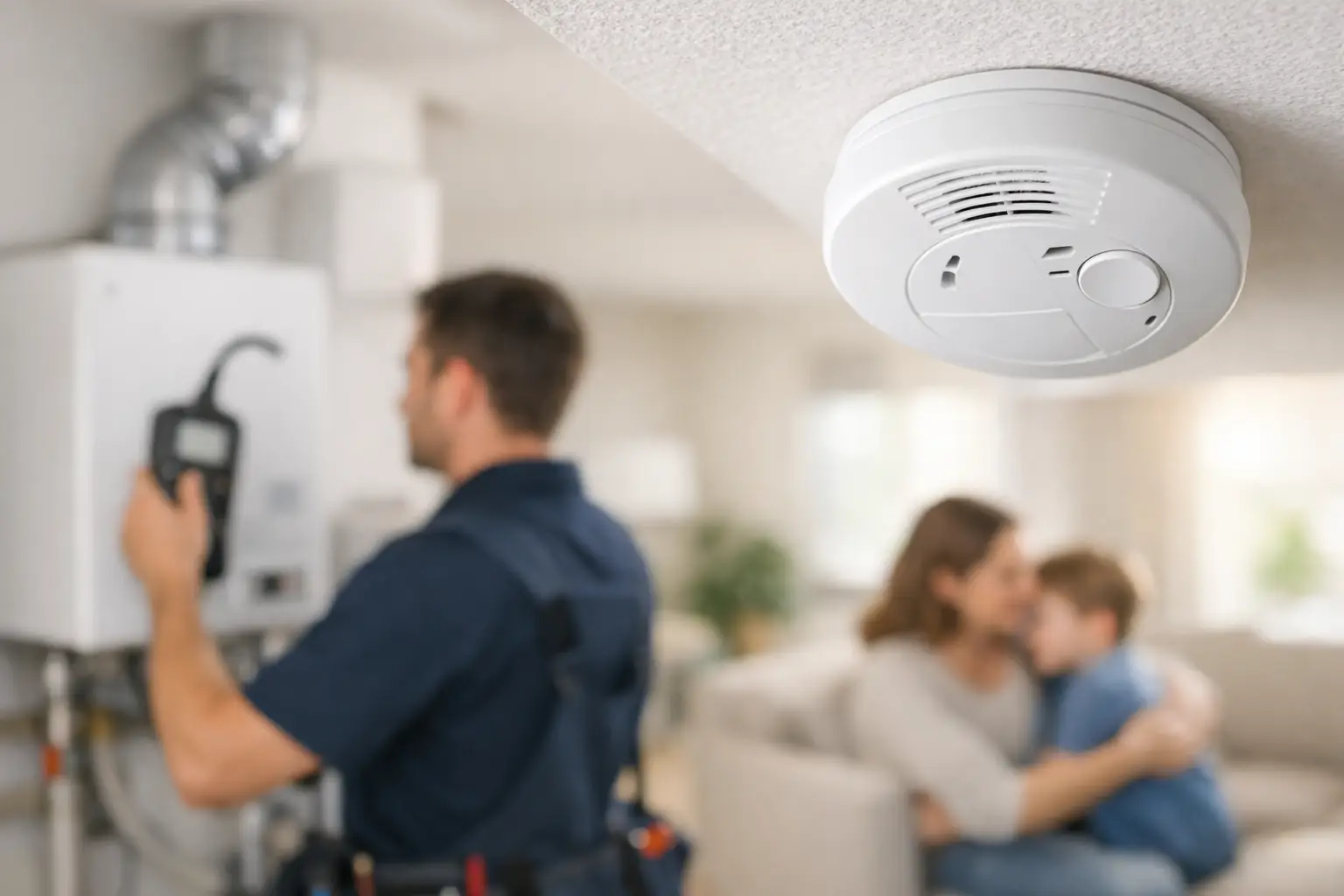

A carbon monoxide monitoring service is designed for the moments when you may not recognize danger yourself. Carbon monoxide has no smell, no color, and no warning taste. A monitored CO detector can alert a professional monitoring center when dangerous conditions are detected, helping get emergency response moving even if you are asleep, away from the property, or unable to make a call.
For Florida and Georgia homeowners, landlords, and business owners, that added layer matters. Fuel-burning appliances, attached garages, generators, fireplaces, water heaters, and commercial equipment can all create carbon monoxide risks when something fails, vents improperly, or operates in an enclosed area. A detector provides the warning. Professional monitoring helps ensure that warning is not missed.
What a Carbon Monoxide Monitoring Service Does
A standard carbon monoxide detector sounds an alarm at the property. That is valuable, but it depends on someone hearing it, understanding the risk, and responding quickly. A monitored detector is connected to your security system. When it goes into alarm, a signal is sent to a 24/7 professional monitoring center.
Monitoring specialists follow the response procedures set for your account. Depending on the situation and the contact instructions you have selected, they can attempt to reach you and request emergency dispatch. The goal is straightforward: help bring trained responders into the picture when a possible CO emergency occurs.
This is especially useful when a home is empty during the workday, when children or older relatives are home, or when a business closes for the night. Carbon monoxide does not wait for a convenient time. A professionally monitored system keeps watch after regular business hours, during travel, and while your household sleeps.
Why the Alarm Alone May Not Be Enough
A battery-operated CO alarm is an essential first line of defense. It is also only one part of a safety plan. If the alarm sounds while everyone is awake and nearby, residents can leave the building and call for help. But real-life emergencies are not always that simple.
Someone may be sleeping behind a closed bedroom door. A child may be frightened or unsure what the alarm means. A family may be away for a weekend while a furnace or water heater develops a problem. In a commercial setting, an alarm could occur after employees have gone home, leaving no one on site to hear it.
A carbon monoxide monitoring service adds a response path beyond the audible alarm. It does not replace evacuation, safe equipment maintenance, or emergency services. It supports those protections by making sure the alarm event reaches people trained to take the next appropriate step.
How Professional CO Monitoring Responds
The process begins with professionally configured equipment. CO sensors are installed in appropriate areas based on the property layout and potential sources of carbon monoxide. They communicate with the security panel, which sends an alarm signal through the system’s available communication path.
When the monitoring center receives that signal, trained operators review the event and follow the established alarm protocol. This can include calling designated contacts and contacting emergency authorities when required by the response plan. A Five Diamond Certified monitoring center provides an added measure of confidence that monitoring operations meet demanding standards for training, redundancy, and emergency response procedures.
The exact sequence can vary. A homeowner may want multiple family members called. A property owner may need a manager, tenant, or maintenance contact included. A business may have opening and closing schedules, authorized contacts, and after-hours procedures that need to be documented clearly. That is why a customized system is usually a better fit than a generic package.
Carbon Monoxide Protection for Homes
At home, the highest priority is protecting people who may be vulnerable to a CO emergency. Young children, sleeping family members, guests, and older adults may not react quickly enough to an alarm or may not be able to leave without assistance.
Professionally monitored CO detection can be especially practical for homes with attached garages. Vehicle exhaust can create a serious concern if a car is left running in or near the garage. Homes with gas appliances, fireplaces, fuel-burning heating systems, or standby generators should also consider how CO detection fits into their broader safety plan.
Placement matters. Detectors should be positioned according to manufacturer instructions and local requirements, with consideration for sleeping areas and likely CO sources. A security professional can help assess your home’s layout rather than leaving you to guess where protection is needed most.
For many households, CO monitoring works best when combined with monitored smoke and fire protection. The threats are different, but the need is similar: when an emergency alarm occurs, you want a clear signal, fast action, and a plan that does not depend on luck.
Carbon Monoxide Monitoring for Businesses
Businesses can face carbon monoxide concerns that are easy to overlook. Restaurants, retail spaces, offices with attached parking, warehouses, multi-unit properties, and facilities with fuel-burning equipment may all need a closer look at their safety coverage.
A CO event can put employees, customers, tenants, and operations at risk. It can also create confusion after hours, when no staff member is available to hear an alarm, investigate the issue, or contact emergency responders. Professional monitoring helps business owners maintain a watchful response process when the building is unoccupied.
Commercial systems should account for the building’s use, hours, equipment, access points, and emergency contacts. A small office may need a simple monitored detector integrated with its alarm panel. A larger property may require multiple devices, separate zones, and a detailed call list. The right approach depends on the property, not a one-size-fits-all checklist.
What to Look for in a CO Monitoring Provider
The equipment is only part of the decision. Reliable monitoring depends on proper system design, professional installation, dependable communication, and a monitoring center that is ready to act around the clock.
Look for a provider that explains the response process in plain language. You should know who will be contacted, what happens if no one answers, and how emergency dispatch is handled. Ask how the system communicates if internet service is interrupted, whether mobile alerts are available, and how battery and device supervision are handled.
Affordability matters too. Protection should not feel out of reach because of confusing equipment bundles or excessive monthly costs. The best value is a system built around the risks at your property, with monitoring that fits your needs and a clear understanding of what you are paying for.
Centex Security helps homeowners and businesses build customized monitored protection that can include burglary, fire, carbon monoxide, cameras, and smart controls. With more than 20 years of industry experience, the focus is on practical protection that works for the way you live or operate.
A Few Important Safety Habits Still Matter
Professional monitoring is powerful, but it is not permission to ignore a CO alarm. If a carbon monoxide alarm sounds, get everyone outside into fresh air immediately and call 911 or your local emergency number. Do not re-enter until emergency personnel say it is safe.
Keep fuel-burning appliances maintained by qualified professionals. Never run vehicles, grills, or generators in enclosed or partially enclosed spaces. Replace detectors according to manufacturer guidance, test them regularly, and make sure everyone in the household or workplace understands the evacuation plan.
If you own rental property or manage a business, review your safety procedures with the people who use the building. Make sure contact lists are current, employees know how to exit, and no one assumes an alarm is a false alarm without taking it seriously.
A carbon monoxide emergency can begin quietly, but your response plan should be clear. A professionally monitored system gives you another set of eyes on the alarm, so help can be set in motion when every minute matters.