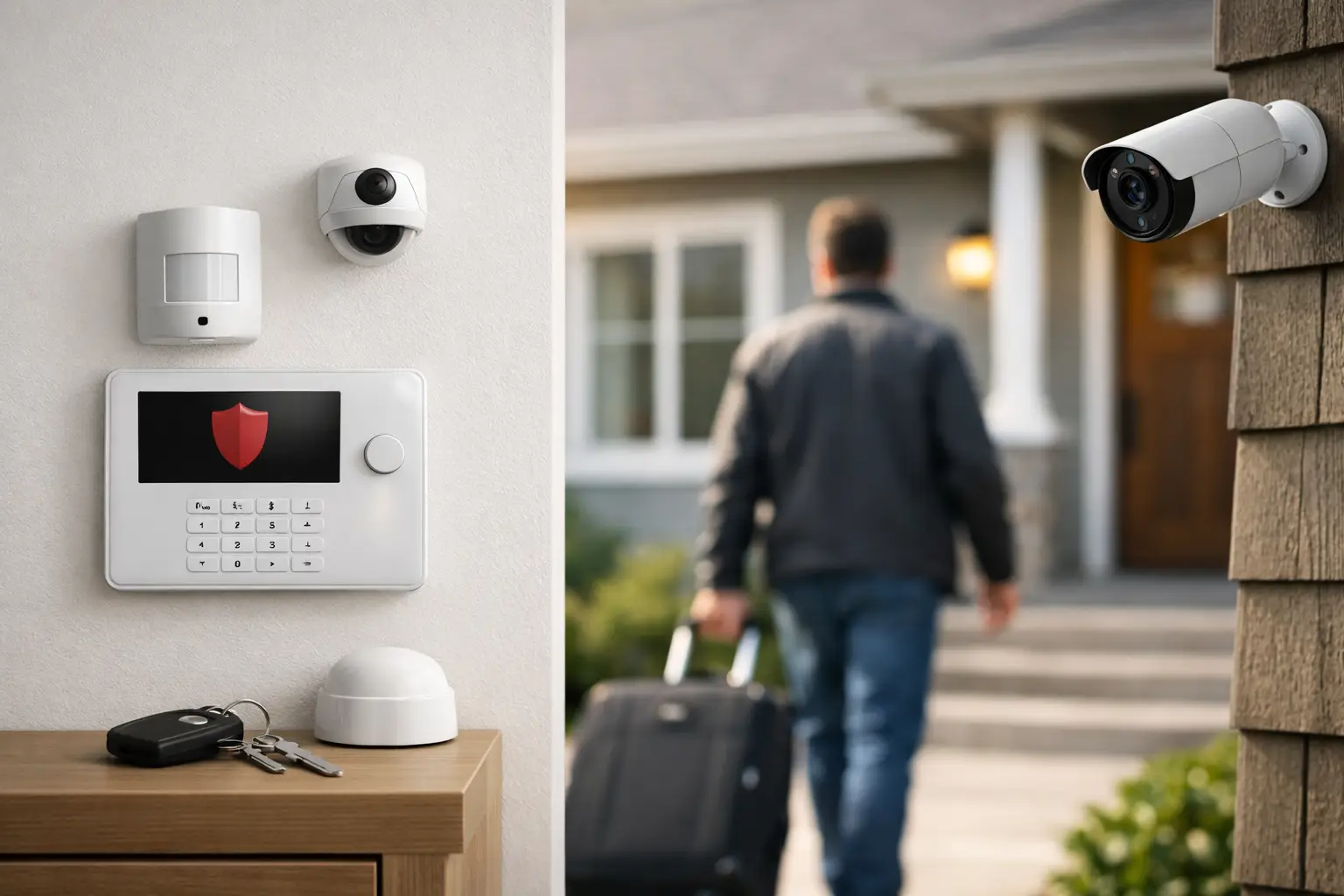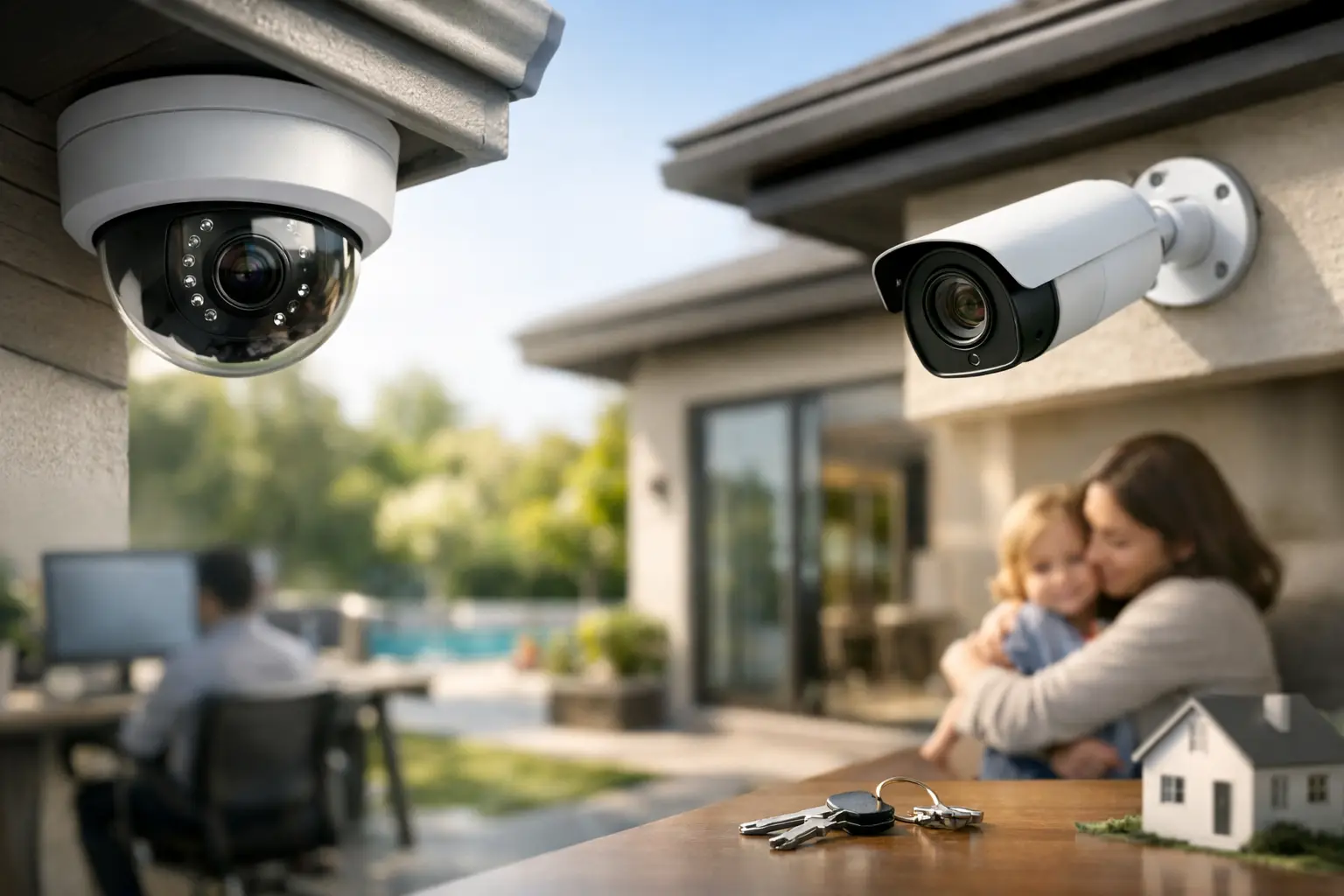

A package arrives while you are at work. A contractor needs access to a side entrance. Your teenager gets home before you do. A customer reports an after-hours issue at your business. Security cameras turn these everyday unknowns into something you can see, verify, and address.
For homeowners and business owners across Florida and Georgia, the value is not simply having video after something goes wrong. A properly designed camera system helps discourage suspicious activity, gives you visibility from virtually anywhere, and works alongside alarms and professional monitoring to protect the people and property that depend on you.
What Security Cameras Actually Do for Your Property
A visible camera can make a potential intruder think twice before approaching a door, vehicle, loading area, or restricted entrance. That deterrent matters. Most crimes of opportunity depend on speed and privacy. When someone knows their actions may be recorded, identified, or noticed in real time, your property becomes a less attractive target.
The benefit does not end at deterrence. Video gives you a clearer account of what happened around your home or business. You can check whether a delivery was dropped off, confirm when employees opened the building, see who approached a gate, or review an event after an alarm. For families, cameras can also provide reassurance when children arrive home, an older relative is expecting care, or a pet sitter visits during a trip.
Security cameras are powerful, but they are not a complete security plan by themselves. Cameras record and alert. A professionally monitored alarm system is designed to trigger an immediate response path when a protected entry, fire device, carbon monoxide detector, or emergency button is activated. Together, these layers provide stronger protection than either one alone.
Where Security Cameras Make the Biggest Difference
Camera placement should follow risk, not guesswork. Mounting several cameras in obvious but low-value locations may leave the entrances, blind spots, and assets that matter most poorly covered.
At a home, the front door is often the first priority because it captures visitors, deliveries, and anyone approaching the property. Driveways, garages, side gates, back doors, and pool areas may also need coverage depending on the layout. A camera aimed at the street can be useful in some cases, but it should not replace clear coverage of the paths someone would use to enter your home.
Businesses need a different conversation. Entry and exit points, cash-handling areas, inventory rooms, loading zones, employee-only doors, and parking areas can all be priorities. A retail store may need clear facial detail at the front entrance and register. A warehouse may need broad views of receiving doors and inventory movement. An office may focus on access points, common areas, and equipment rooms.
The right plan depends on the property, the lighting, the distance to the area being watched, and the level of detail you need. Seeing that a vehicle entered a driveway is different from capturing a readable license plate. Identifying movement at a rear door is different from clearly recognizing a face. A no-cost consultation can help match camera locations and equipment to the outcome you actually need.
Outdoor Coverage Needs More Than a Good View
Florida and Georgia weather can be hard on equipment. Heat, humidity, heavy rain, wind-driven storms, and changing sunlight all affect camera performance. Outdoor devices need appropriate weather protection and secure mounting, while cable paths and power connections must be planned carefully.
Night coverage deserves the same attention. A camera that looks sharp in daylight may lose useful detail in a dark driveway or poorly lit parking area. Infrared night vision can help, but lighting conditions, mounting height, and camera angle still determine whether the footage is useful. In many situations, a well-placed motion light supports both security and better video quality.
Do Not Create Your Own Blind Spots
Placement errors are common. Cameras mounted too high may capture hats and the tops of heads instead of faces. Cameras pointed directly into a bright sunrise, reflective window, or vehicle headlights can produce washed-out images. Trees, seasonal landscaping, signs, and parked vehicles can quietly block a view that looked ideal on installation day.
Professional installation helps avoid these problems before they become expensive frustrations. It also creates a cleaner, more dependable system, with equipment mounted securely and views configured for the specific property rather than a generic diagram.
Features That Matter in a Camera System
It is easy to get distracted by product labels and long feature lists. Start with how you will use the system. A family that wants to check the front door from a phone has different needs than a business owner who needs to review activity at several entrances.
Look for practical capabilities such as high-quality video, night viewing, motion alerts, remote access, and reliable video storage. Two-way audio can be helpful at a front door or gate, allowing you to speak with a visitor without opening the door. Mobile controls allow you to check live video or review events when you are away from the property.
Storage is an especially important decision. Some systems save clips locally, while others use cloud-based storage. Local storage can offer greater direct control and may continue recording without an internet connection, depending on system design. Cloud storage can make it easier to retrieve video remotely, but it may involve ongoing service costs and depends on internet connectivity. The best choice depends on how long you need to retain footage, how many cameras you have, and how quickly you need access to an event.
For commercial properties, user permissions can be just as valuable as video quality. Managers may need full access, while other employees only need permission to view certain cameras. Clear access controls help protect privacy and keep the system useful without making it available to everyone.
Cameras, Alarms, and Monitoring Work Better Together
Video can show you what is happening. An alarm can alert you that a protected door, window, motion area, or life-safety device has been activated. Professional monitoring adds a trained response team that can follow established procedures when an alarm event occurs, including contacting you and requesting emergency response when appropriate.
That distinction matters when you are asleep, traveling, in a meeting, or unable to reach your phone. A notification is useful, but it still depends on you seeing it and deciding what to do next. Monitored protection is built to provide another layer of action when time is critical.
Centex Security designs camera systems alongside burglary alarms, smart-home controls, and monitored fire, carbon monoxide, and medical emergency protection. The goal is simple: give you practical control every day and dependable support when an emergency demands more than a phone alert.
Privacy and Everyday Use Deserve a Plan
Good camera coverage should make your household, employees, and customers feel safer, not watched unnecessarily. Exterior cameras should focus on your entrances, boundaries, and property. Avoid aiming cameras into neighbors’ private spaces. Indoors, be clear about where cameras are used and why, especially in workplaces or rental properties where privacy rules and expectations may apply.
Set up alerts carefully, too. If every passing car, tree branch, or neighborhood cat triggers a notification, people often begin ignoring alerts altogether. Motion zones and sensitivity settings can reduce unnecessary activity while keeping important areas protected. Review settings after installation and again when landscaping, traffic patterns, or business operations change.
A camera system should fit your daily routine. You should know who can access it, how to review footage, where clips are stored, and what steps to take when you receive an alert. Those details turn technology into protection you can actually use.
The most valuable security camera is not necessarily the one with the longest specification sheet. It is the one placed where it can see what matters, configured to alert the right people, and supported by a security plan built for your home or business. A thoughtful consultation now can prevent a painful question later: what happened when no one was watching?